Learn Chemistry the Simple Way

Clear explanations of chemical tests, reactions, mechanisms, and laboratory techniques designed for students.

Explore Chemical Tests Start Learning
A clean, high-key laboratory setup featuring beakers, a funnel, and a glass pipette with a soft purple and gray color grade, emphasizing a professional scientific environment.
A student in a white lab coat uses a pipette in a bright, minimalist chemistry lab with modern glassware and a soft-focused researcher in the background.
Close-up of three test tubes in a rack; the right tube shows a positive brick-red color change, the middle is blue, and the left is yellow-brown, illustrating a successful chemical color-change reaction.
Student in a lab coat and safety gear performs a titration using a burette and pH meter.

Explore Chemistry Tests and Reactions

ChemistrySH simplifies complex lab tests, reaction mechanisms, and organic chemistry principles, bridging the gap between theory and practice for students and professionals.

Simplified Mechanisms

We break down complex reaction pathways into easy-to-digest steps, helping you visualize how molecules interact during experiments.

Guided Lab Tests

From Tollens to Baeyer, explore a comprehensive library of chemical tests with clear expected results and troubleshooting tips.

Chemical Test Categories

Explore our comprehensive guide to chemistry lab tests and organic chemistry reactions organized by functional groups.

Carbohydrate Tests

Includes Benedict Test, Molisch Test, Fehling Test

Learn qualitative tests for detecting carbohydrates and reducing sugars in chemistry lab.

Learn more

Aldehyde and Ketone Tests

Includes Tollens Test and Fehling Test

Understand chemistry tests for aldehydes including the silver mirror reaction and Fehling solution test.

Learn more

Phenol Tests

Includes Ferric Chloride Test

Study organic chemistry tests for identifying phenols using ferric chloride test procedures.

Learn more

Unsaturation Tests

Includes Baeyer Test, Bromine Water Test

Master chemistry lab tests for unsaturation and double bonds using the Baeyer and Bromine water test method.

Learn more

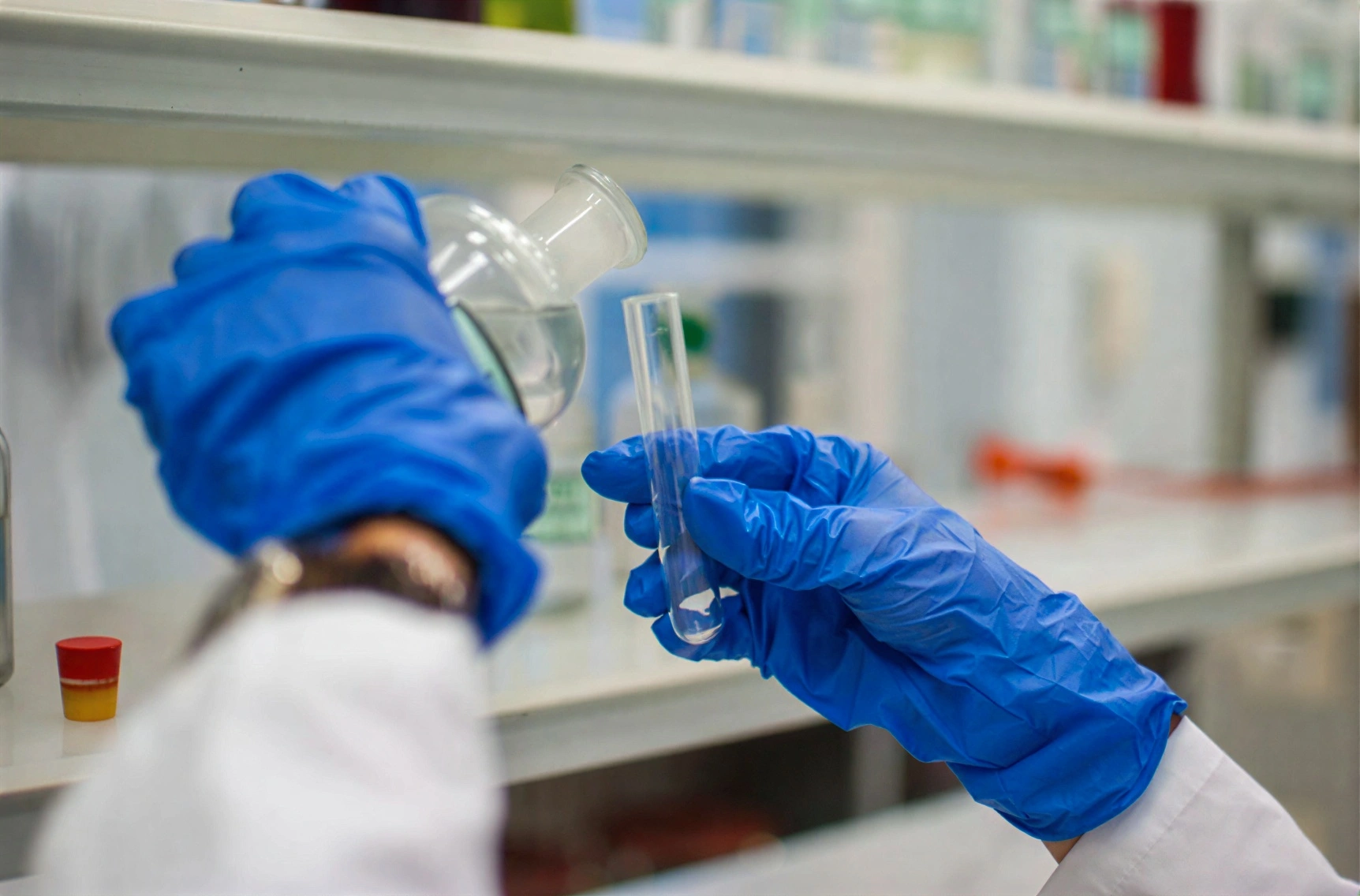
A close-up of a person in a white lab coat and bright blue nitrile gloves carefully pouring a clear liquid from a glass reagent bottle into a test tube.

Master Organic Chemistry

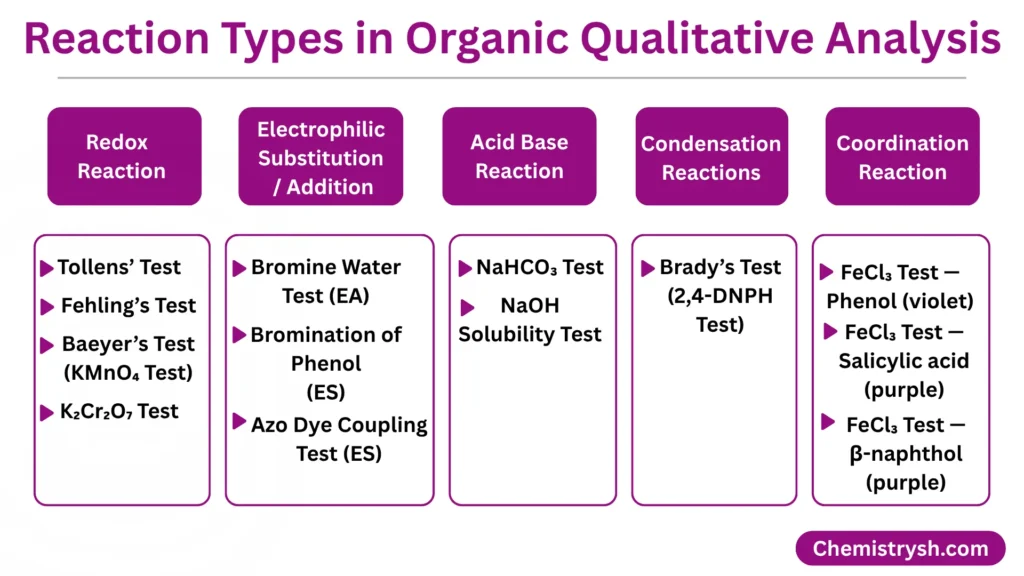
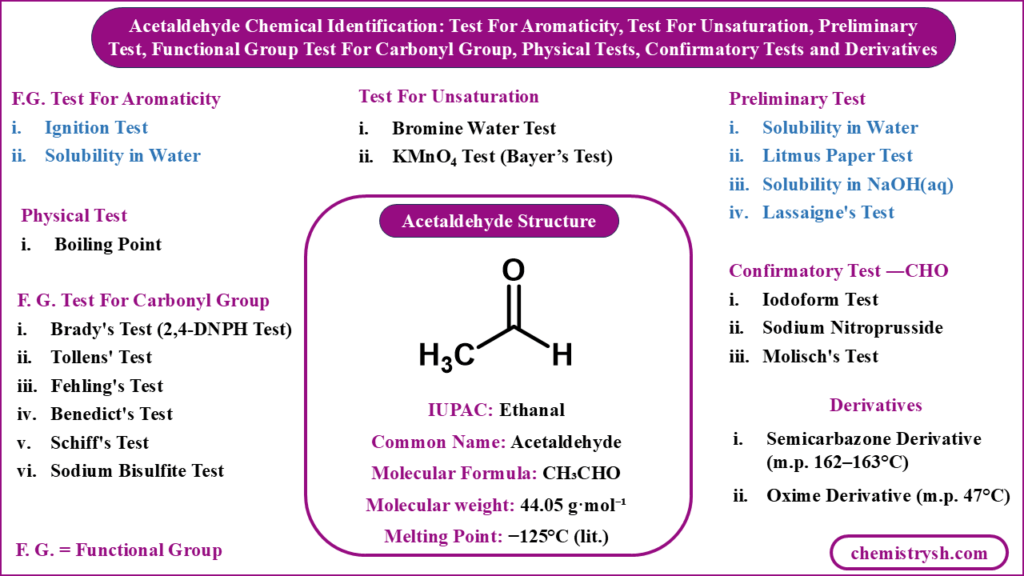
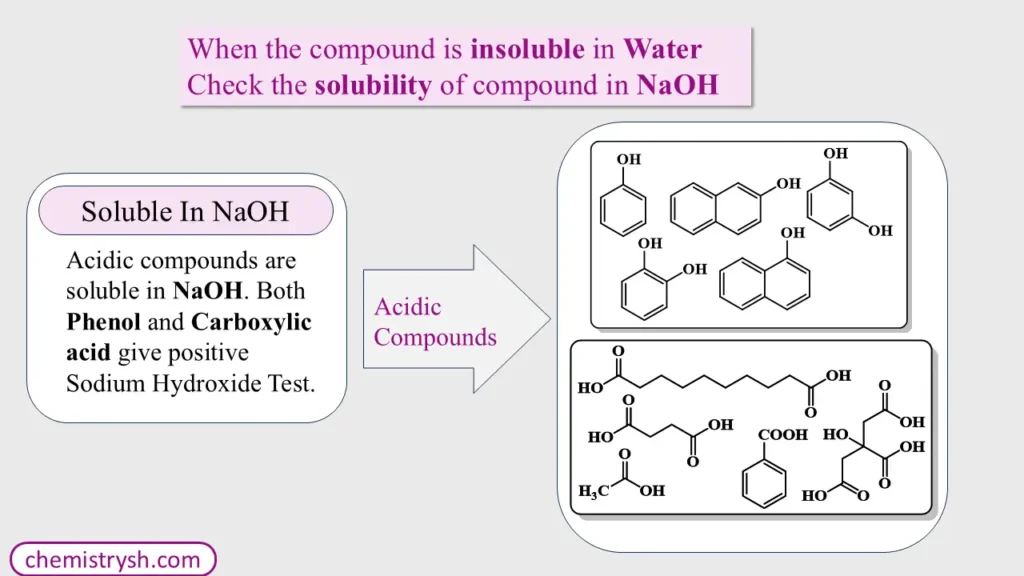
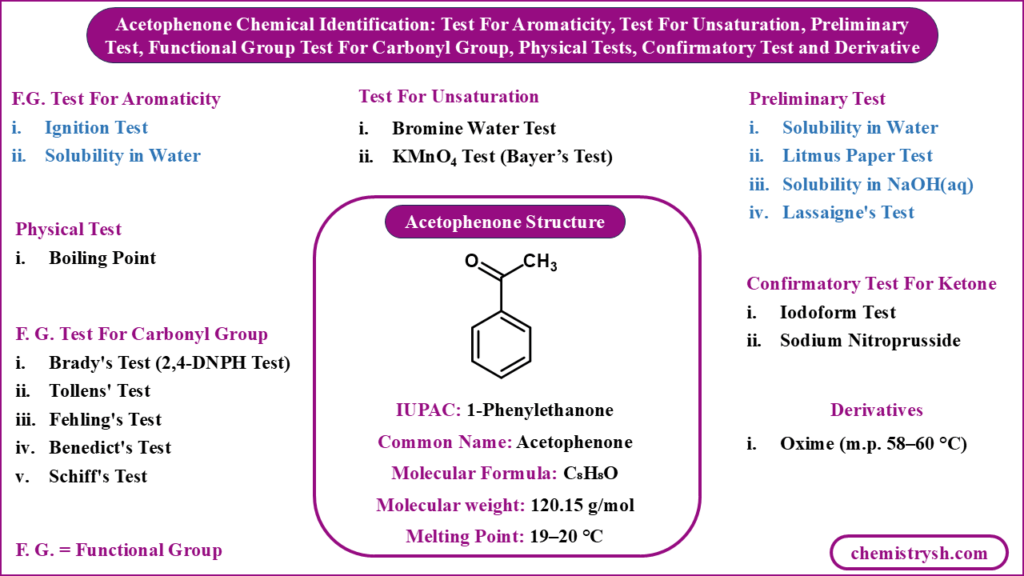
we simplify complex mechanisms and analytical tests. Whether you’re mastering the Tollens’ test or mapping out esterification, our professional infographics and resources provide the clarity you need to excel in the lab and the classroom.

Explore Reaction Roadmaps

Chemistry Tests Library

Deep dive into the student-friendly explanations of chemistry test procedures, organic chemistry reactions, and laboratory techniques, every chemistry student should know.
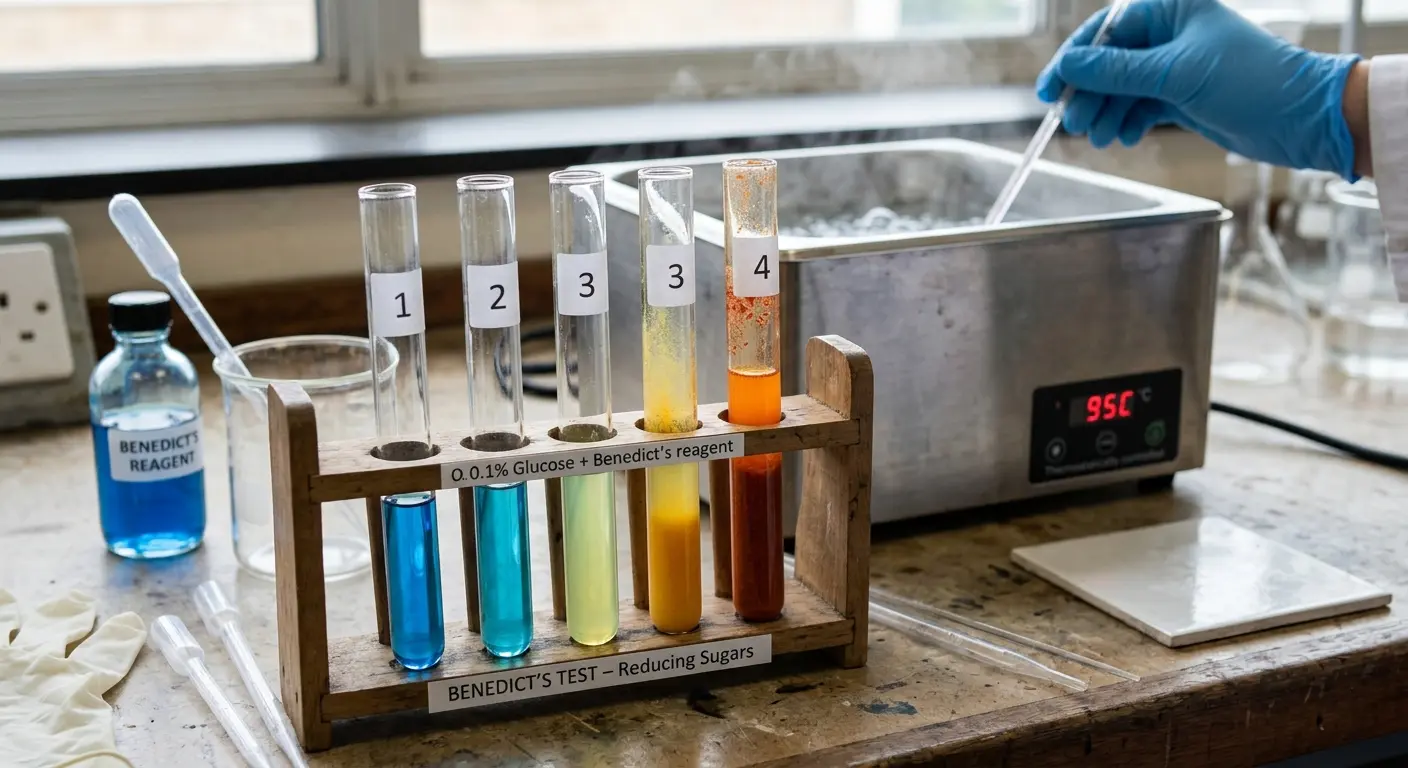
Five test tubes in a rack showing Benedict's test colors: blue, green, yellow, orange, and brick-red, with a bottle labeled "Benedict's Reagent" visible on the lab bench.

Benedict Test for Reducing Sugars

Complete guide to Benedict test procedure for detecting reducing sugars in carbohydrates with step-by-step chemistry lab instructions.
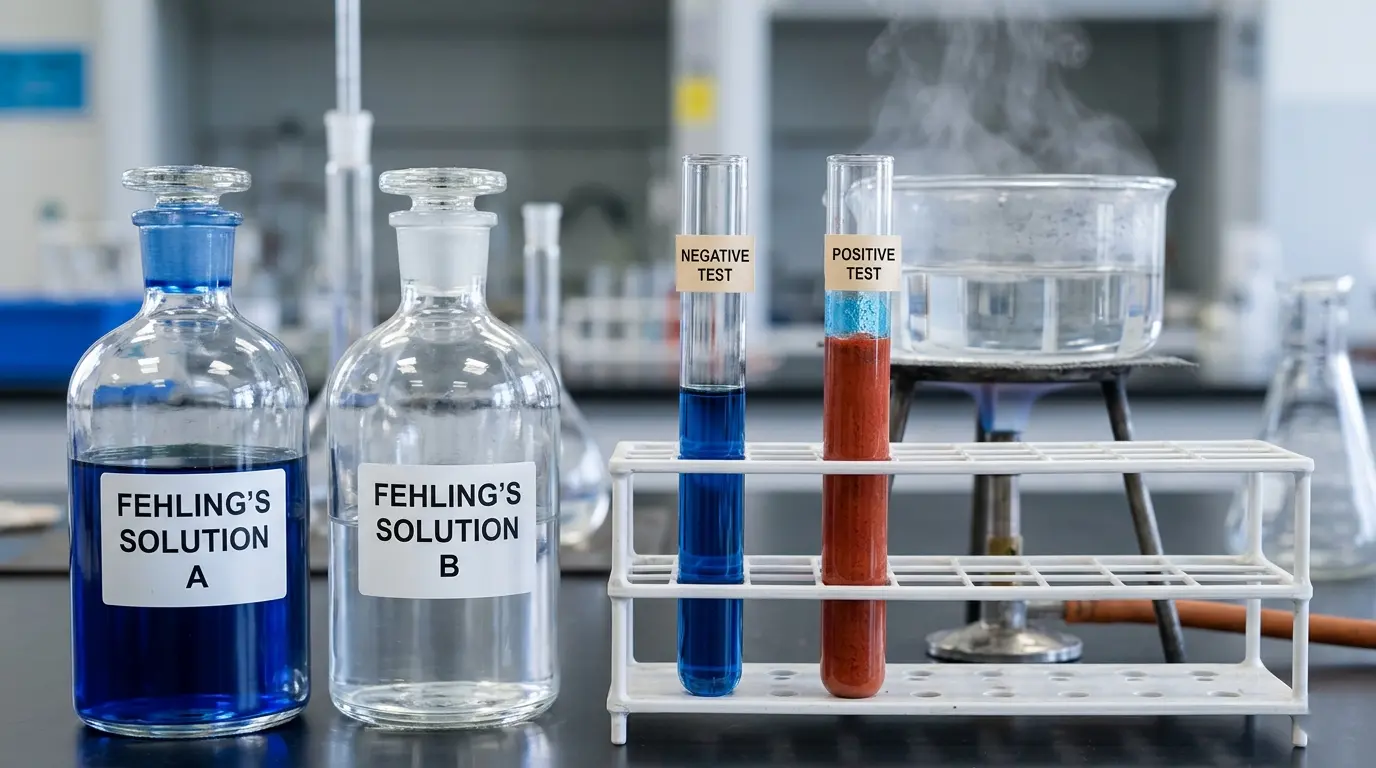
A chemistry laboratory setup showing Fehling’s Test. On the left are two glass reagent bottles labeled "Fehling's Solution A" (blue liquid) and "Fehling's Solution B" (clear liquid). In a white test tube rack, two tubes show the results: a "Negative Test" tube containing a deep blue solution and a "Positive Test" tube containing a thick brick-red precipitate.

Fehling Solution Test Explained

Learn how Fehling test works in organic chemistry to identify aldehydes and reducing sugars through chemical reactions.
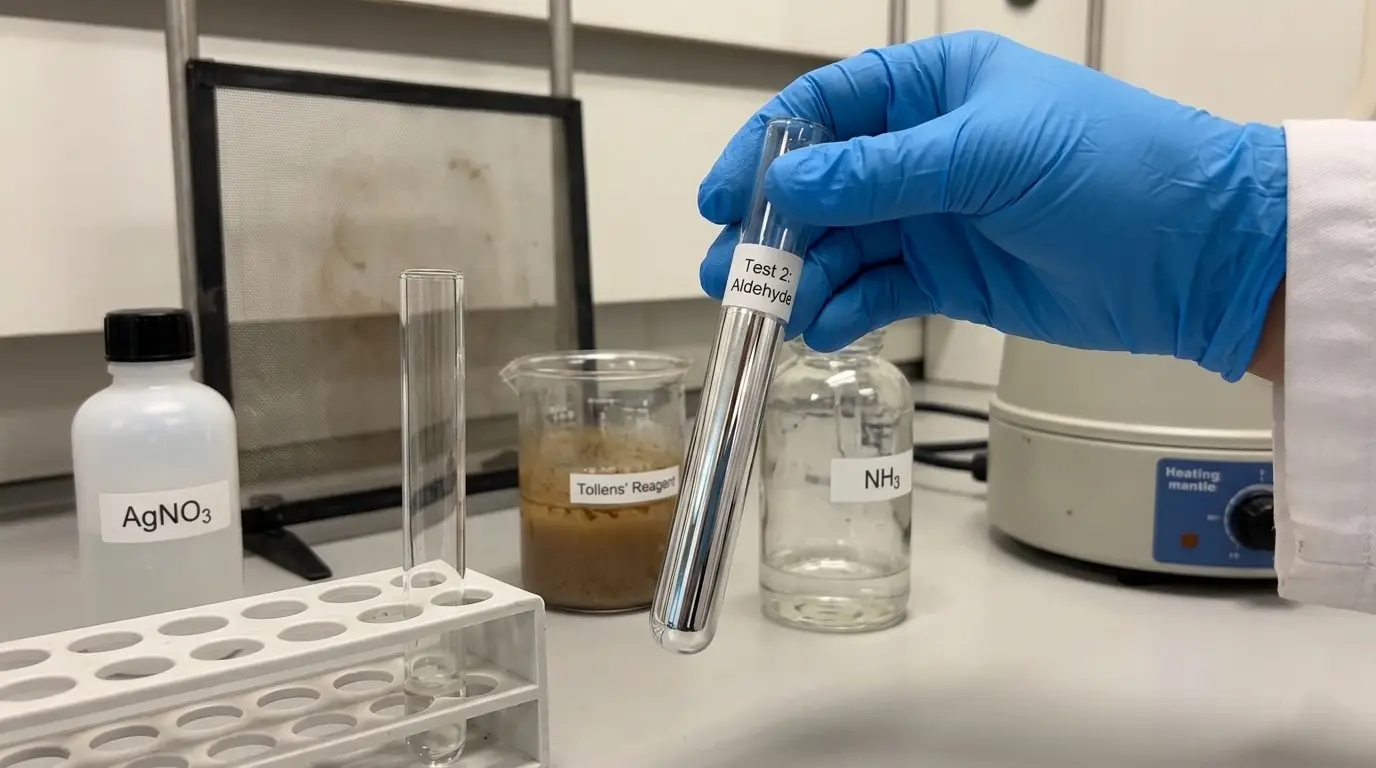
A laboratory setting showing a gloved hand holding a test tube that has a shiny, reflective silver coating on the inner surface, indicating a positive Tollens' test. In the background, chemical bottles labeled AgNO3, Tollens' Reagent, and NH3 are visible on a lab bench next to a heating mantle.

Tollens Test (Silver Mirror) Reaction

Understanding the Tollens test for aldehydes – the famous silver mirror reaction used in qualitative chemistry tests.
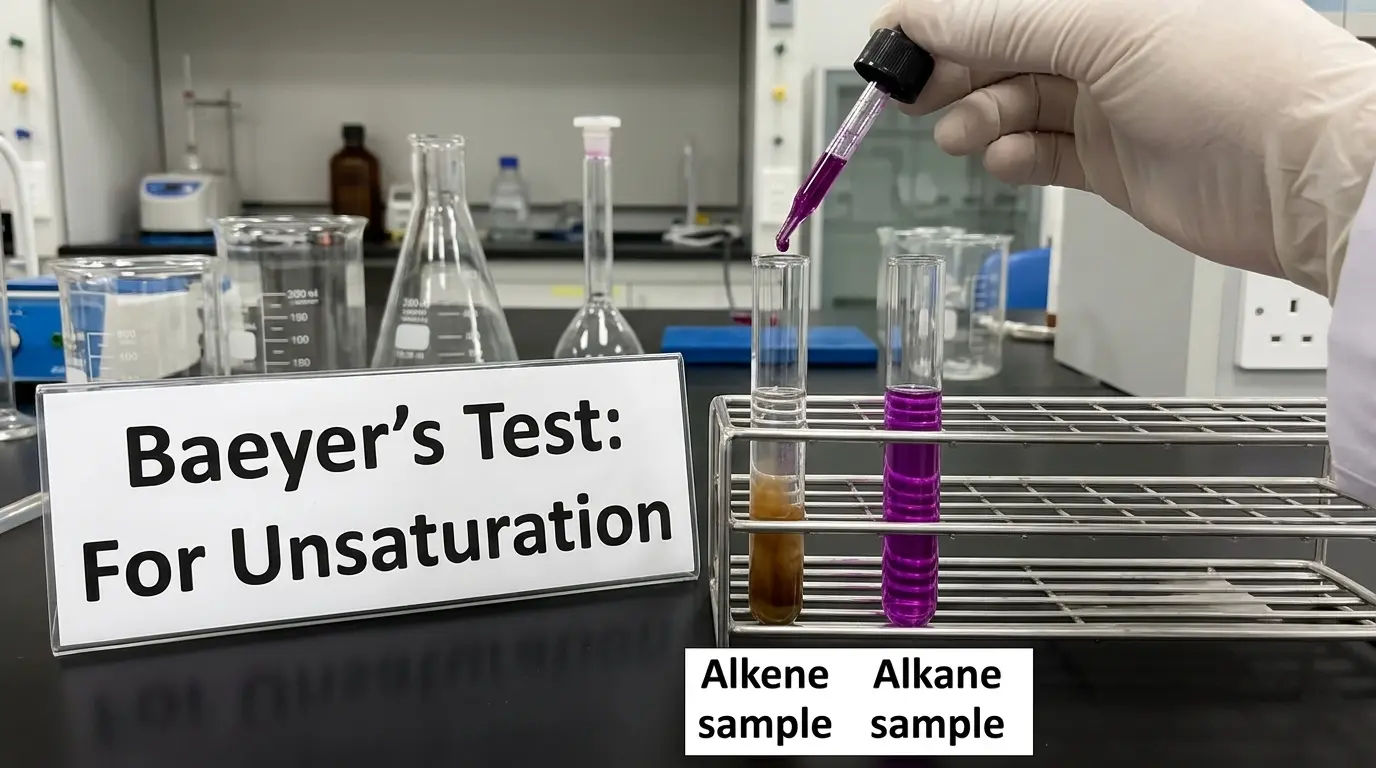
A laboratory bench displaying Baeyer’s test. A sign reads "Baeyer's Test: For Unsaturation." Two test tubes are in a rack: the left tube (labeled Alkene sample) shows a brown precipitate, indicating a positive result, while the right tube (labeled Alkane sample) remains bright purple. A gloved hand is using a dropper to add purple potassium permanganate solution into the alkene sample.

Baeyer Test for Unsaturation

Master the Baeyer test procedure to detect carbon-carbon double bonds and unsaturation in organic chemistry compounds.
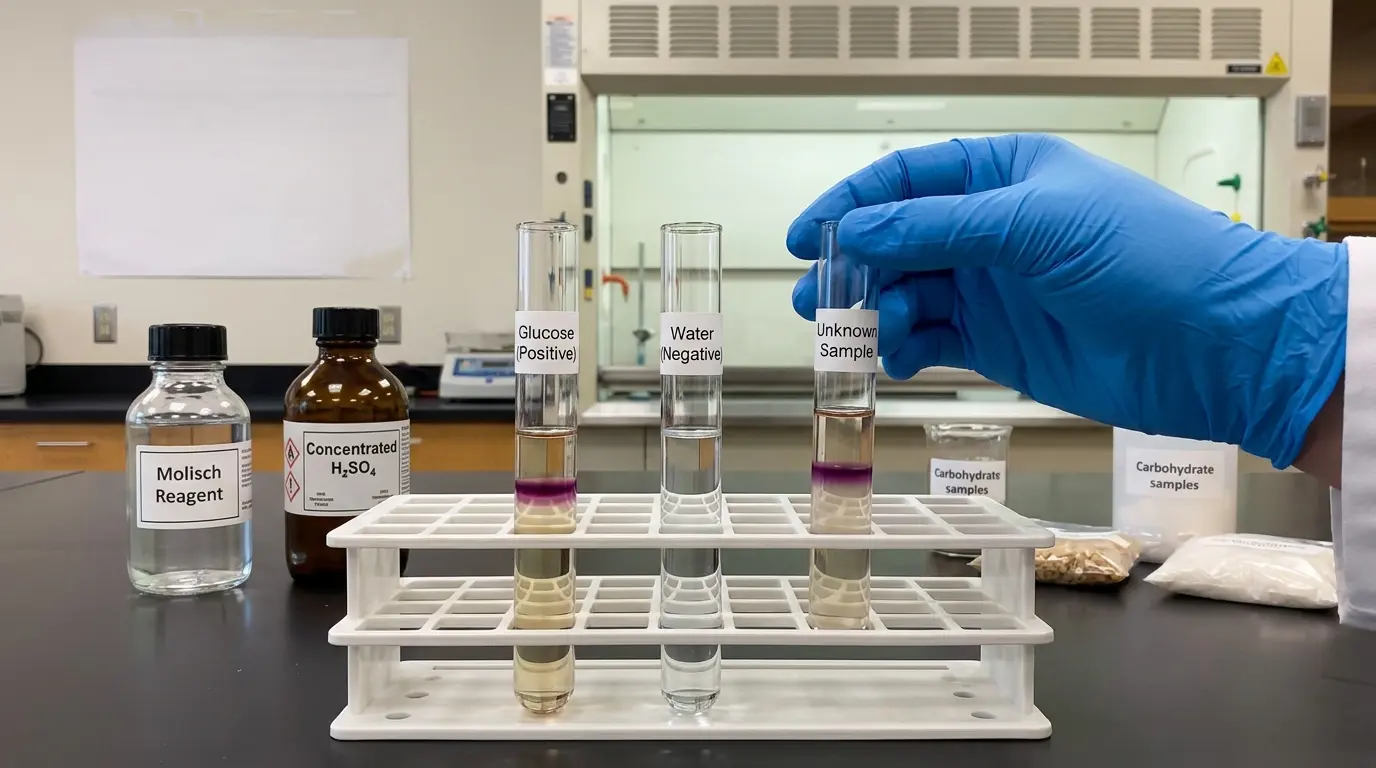
A glove-covered hand holds a test tube labeled "Unknown Sample" with a positive purple ring result for the Molisch test. The test tube is among a set of three in a rack, with other samples labeled "Glucose (Positive)" and "Water (Negative)". A bottle of Molisch Reagent and Concentrated H2SO4 are positioned in the foreground.

Molisch Test for Carbohydrates

Learn the Molisch test method for detecting all types of carbohydrates in chemistry lab with detailed reaction mechanisms.
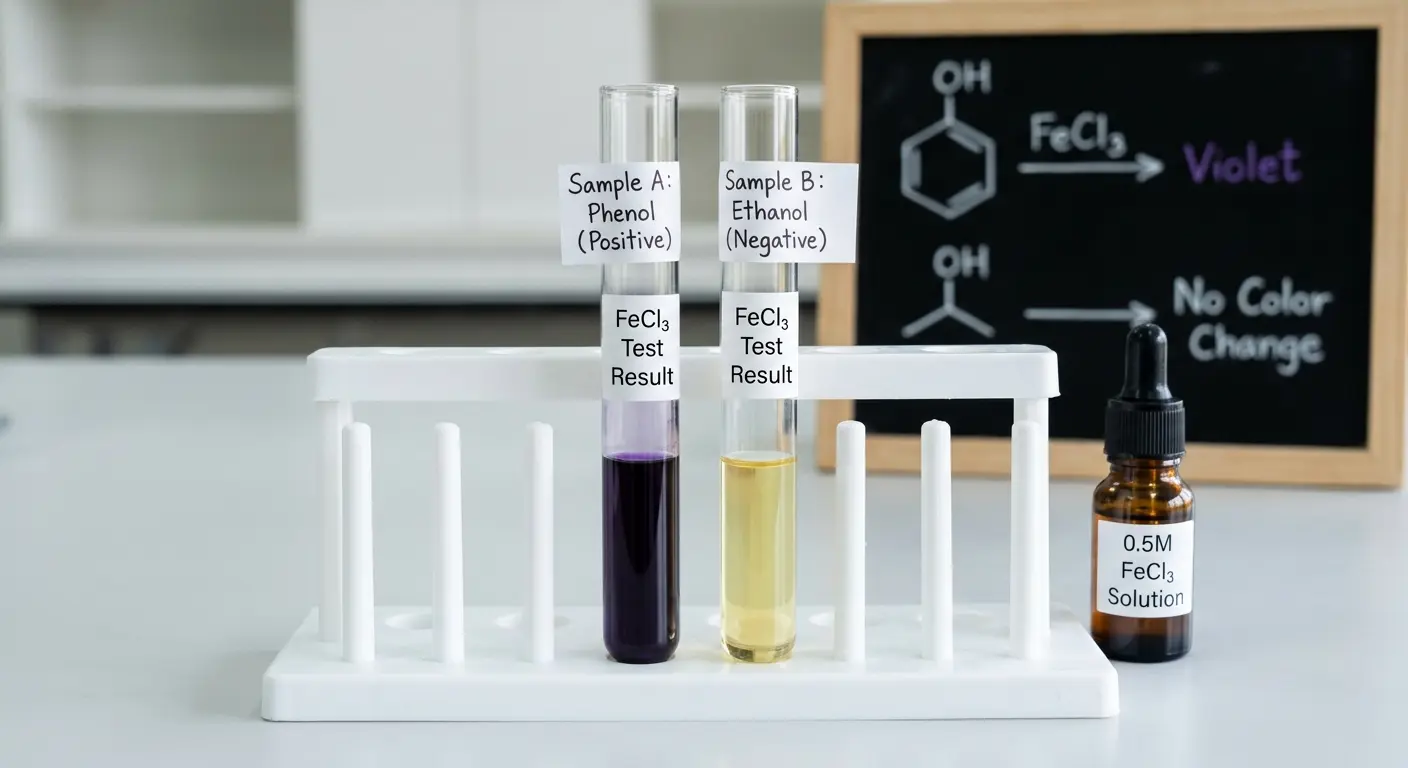
A laboratory setup showing two test tubes in a white rack. The left tube contains a deep violet solution labeled "Sample A: Phenol (Positive)," and the right tube contains a yellow solution labeled "Sample B: Ethanol (Negative)." A small amber dropper bottle of 0.5M FeCl3 solution stands to the right.

Ferric Chloride Test for Phenols

Complete guide using ferric chloride test (color change) in organic chemistry for identifying phenolic compounds and enols.

View All Posts

Why Study With ChemistrySH

Your trusted companion for chemistry learning and exam success.

Simple Explanations

Complex chemistry concepts broken down into easy-to-understand language.

Student-Friendly Diagrams

Clear visual representations of reactions and molecular structures.

Lab-Focused Guides

Practical laboratory techniques and safety procedures explained.

Exam-Oriented Notes

Focused study materials designed for exam success.

All-Level Academic Mastery

For Matric, FSc, O/A-Levels,and BS students.

Join Thousands of Successful Chemistry Students

Our comprehensive resources have helped students achieve better grades and deeper understanding of chemistry concepts.

98%

Success Rate

4.9/5

Student Rating

50K+

Happy Students